
Fire safety / 6 min read
Fire safety in a commercial LPG kitchen: what should be planned before opening?
Good fire protection is a coordinated system of fuel isolation, ventilation, detection, suppression, housekeeping, and trained response - not just a fire extinguisher near the cooker.
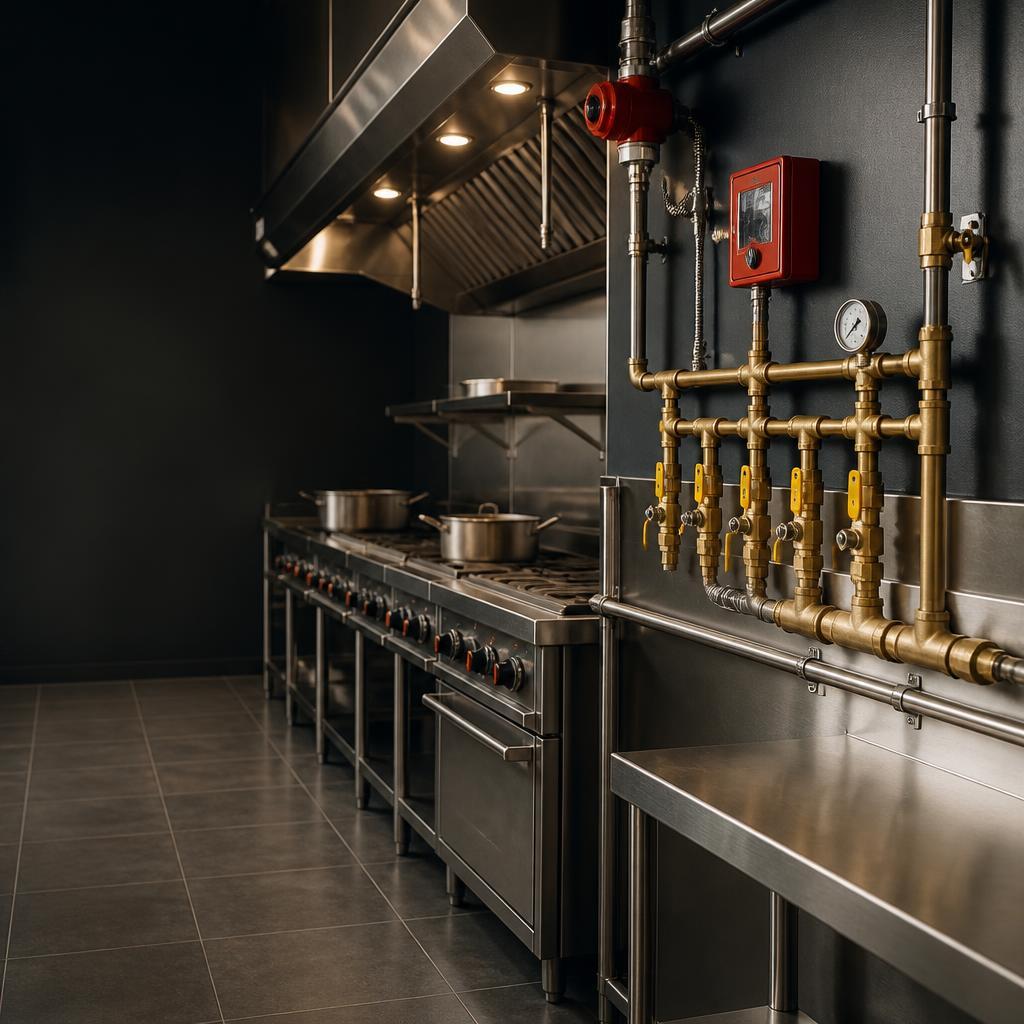
Good fire protection is a coordinated system of fuel isolation, ventilation, detection, suppression, housekeeping, and trained response - not just a fire extinguisher near the cooker.
Article
Fire protection starts before the first service
A commercial kitchen is a working system, not just a room full of appliances. LPG storage or supply, regulators, cooking equipment, extraction, electrical services, fire detection, escape routes, and staff procedures all influence one another. If they are planned separately, an apparently complete installation can still leave gaps between the fuel system, the fire strategy, and the way people actually work.1, 2, 3
For a Kenyan project, begin with the current approvals, licensing, and site-specific fire-risk requirements that apply to the property. EPRA’s LPG reticulation guidance separates design and installation from testing, commissioning, maintenance, and end-user safety awareness; that is a useful reminder that fire safety continues after the pipework has been installed.1
Make the LPG isolation route obvious
Everyone who may need to respond to an incident should know how the gas supply is isolated, who is authorised to operate each valve, and what happens after an isolation. The route from the source through regulators and branch lines to the cooking appliances should be documented, labelled, and kept accessible rather than hidden behind stored equipment or later alterations.1, 2
The exact arrangement depends on the site, system design, appliance loads, and applicable requirements, so a generic valve location is not a substitute for engineering. Before opening, ask for pressure-test records, commissioning evidence, as-built drawings, and a clear handover of the normal and emergency isolation procedure. LPG installation and commissioning should be carried out by competent, appropriately licensed people.1, 2
Treat extraction and grease as fire-protection concerns
Cooking vapours can deposit grease in hoods, filters, and ducts. That buildup can turn a small cooking incident into a larger fire path if extraction equipment is poorly selected, badly maintained, or difficult to clean. The kitchen fire strategy should therefore consider the cooking appliances, hood, filters, duct route, cleaning access, and surrounding construction together - not as unrelated equipment packages.2, 3
NFPA 96 is an international technical reference for preventive and operative fire safety in commercial cooking operations. It is not automatically Kenyan law, but it helps frame the questions a project team should ask about ventilation control, fire protection, inspection, and maintenance. Confirm which Kenyan approvals, standards, and inspection requirements apply to the specific premises before relying on any external standard.3, 4
Coordinate detection, suppression, and escape
A fire alarm, gas detection, automatic suppression system, portable extinguishers, emergency lighting, and escape routes should work as one response plan. The right combination depends on the hazards, kitchen layout, fuel arrangement, occupancy, and fire-risk assessment. Equipment should be selected and positioned by a competent fire-safety professional rather than added as a last-minute catalogue purchase.2, 3
Keep escape routes and access to isolation points clear of stock, gas cylinders, bins, and temporary equipment. Staff should know the alarm signal, the assembly point, when it is safe to isolate the gas, and when to evacuate immediately. A safe response is not to investigate a suspected leak with a naked flame or to re-enter before the responsible person and emergency services have confirmed that it is safe.2, 4
Turn the design into a working routine
Fire protection is only reliable when the routine around it is reliable. Agree who checks the kitchen before opening, who records defects, how hood and filter cleaning is scheduled, how valves and detection devices are inspected, and how contractors document any change to the gas or extraction system. Keep manuals, test certificates, maintenance records, training records, and emergency contacts together so the next shift does not have to reconstruct the system during an incident.1, 2, 4
Train staff using the actual room and equipment. A useful exercise should cover the first response to a suspected gas leak, the limits of staff intervention, evacuation, calling for help, and the information to give responders. Kenya’s Occupational Safety and Health Act places duties on occupiers and workplaces around safety policy, audits, dangerous situations, and the protection of people at work; use those duties as part of a wider, documented fire-safety management process.4
A pre-opening handover should answer six questions
Before the first service, the project team should be able to answer: Where is the primary gas isolation point? How are branch valves identified? What tests and commissioning records have been completed? What parts of the extraction and suppression system need routine cleaning or inspection? What should staff do when gas is suspected or an alarm sounds? Who owns the maintenance, training, and record-keeping after handover?
The aim is not to make every kitchen look the same. It is to make the fuel system, fire controls, escape plan, and operating responsibilities understandable for that particular site. Treat the guidance below as a planning reference, then confirm the Kenyan approvals, licensed-person requirements, and site-specific fire-risk measures before the kitchen opens.1, 3, 4
References
Sources and further reading
- Energy and Petroleum Regulatory Authority (EPRA), Kenya. Guidelines on Licensing of LPG Reticulation (2025). View source
- World Liquid Gas Association. Guide to Good Industry Practices for LPG in Commercial Kitchens (2015). View source
- National Fire Protection Association. NFPA 96, Standard for Ventilation Control and Fire Protection of Commercial Cooking Operations. View source
- Kenya Law. Occupational Safety and Health Act (2007; revised 2022). View source